


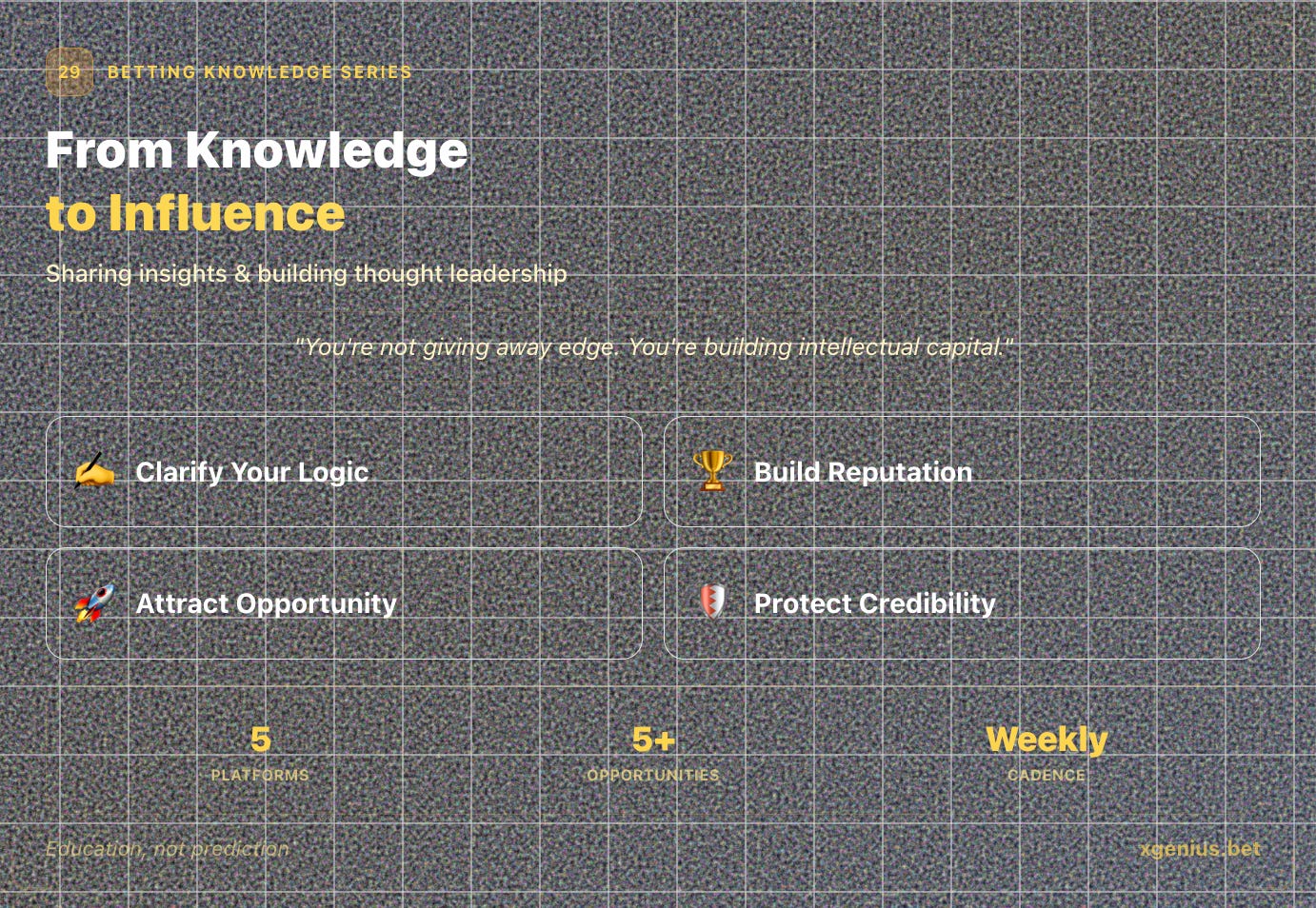
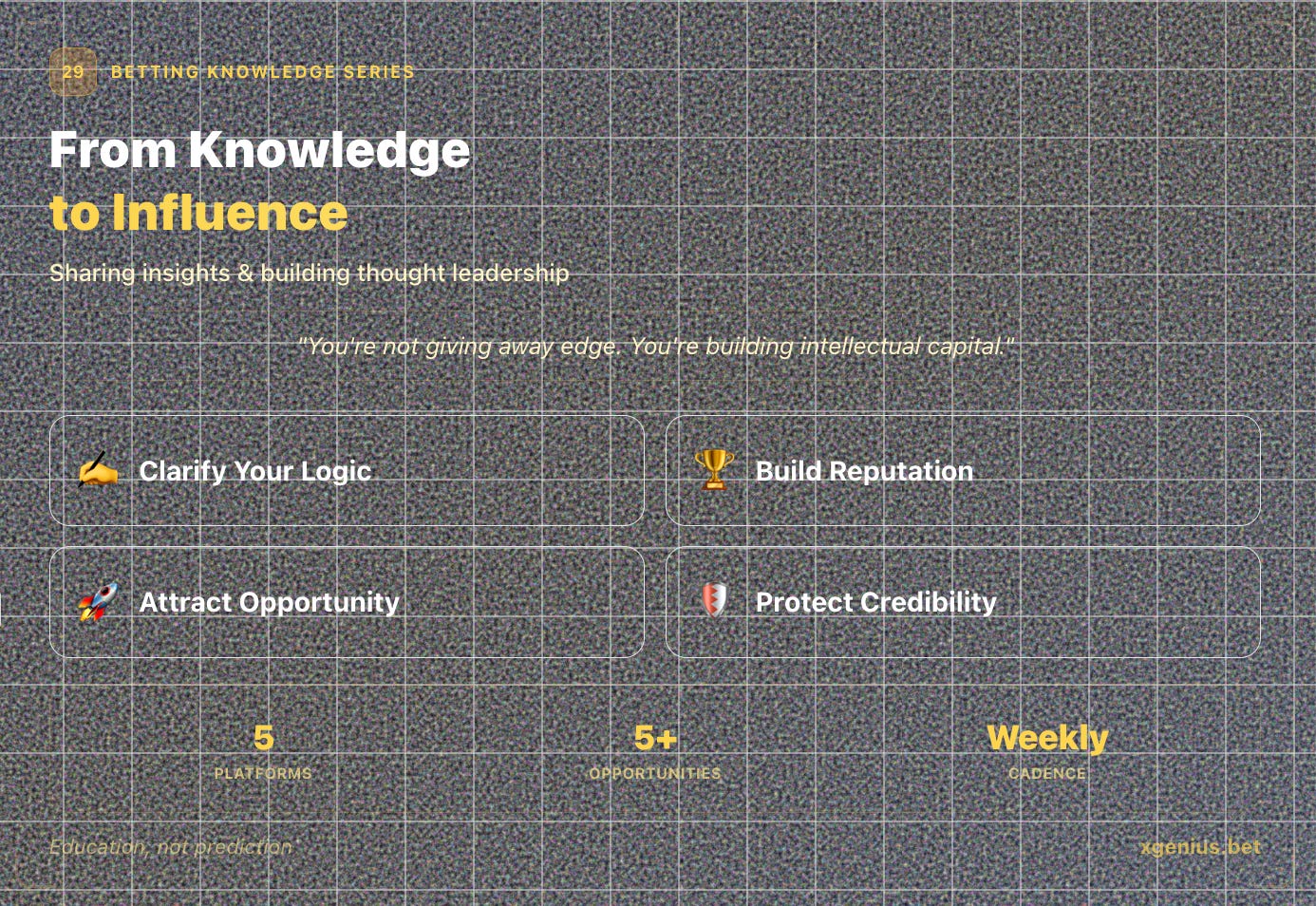
From Knowledge to Influence: Sharing Insights & Building Thought Leadership
Betting Knowledge Series — Lesson 29
Introduction
At some point, every advanced bettor realises that knowledge has more value when it’s shared.
Teaching others sharpens thinking, attracts collaboration, and creates visibility. Which often leads to funding, partnerships, or consulting opportunities.
This lesson explores how to transition from quiet competence to respected authority. Without ego or hype. By communicating your edge clearly, ethically, and consistently.
1. Why Sharing Matters
Three reasons professionals start publishing or speaking:
1️⃣ Clarification – Writing forces you to organize your logic. If you can explain it simply, you truly understand it.
2️⃣ Reputation – Sharing builds trust and credibility, which leads to better access and opportunity.
3️⃣ Legacy – Teaching preserves your insights beyond your current systems.
You’re not giving away edge. You’re building intellectual capital. I’ve seen traders unlock doors they didn’t even know existed just by documenting what they already know.
2. Thought Leadership ≠ Loud Opinions
True thought leadership doesn’t mean shouting predictions or trying to look smart on social media.
It means offering clarity in a noisy field.
Ask yourself:
“What confusion can I remove for others?”
Authority grows not from self-promotion, but from consistent, useful communication. The loudest voices are rarely the sharpest ones.
3. Choosing Your Platform
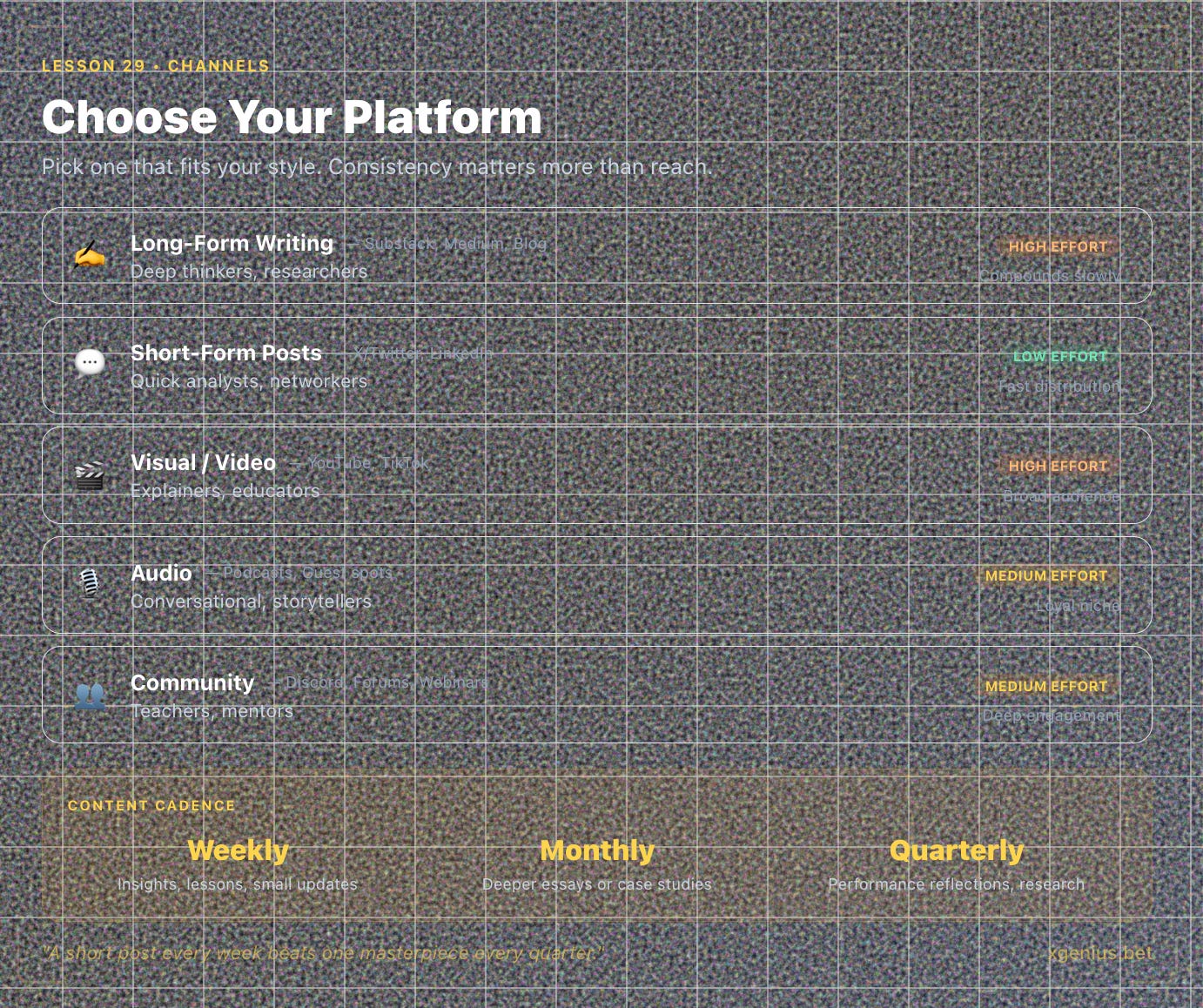
Pick the medium that fits your style and audience:
Long-form writing: Substack, Medium, personal blog.
Short-form insights: Twitter/X threads, LinkedIn posts.
Visual content: YouTube explainers, TikTok breakdowns.
Audio: Podcasts or guest appearances.
Community teaching: Discord, forums, or webinars.
Start with one. Consistency matters more than reach.
4. Define Your Message
You can’t write about everything. Create a clear theme that aligns with your expertise.
Examples:
“Quantitative football trading using xG and EV principles.”
“Mindset and discipline for professional bettors.”
“Automating models and dashboards for smarter trading.”
Your message becomes the anchor of your content.
Readers should instantly know what to expect when they see your name. You want people to think, “Oh, that’s the person who writes about X.”
5. The Art of Communicating Complex Ideas Simply
Professionals often lose readers by using jargon.
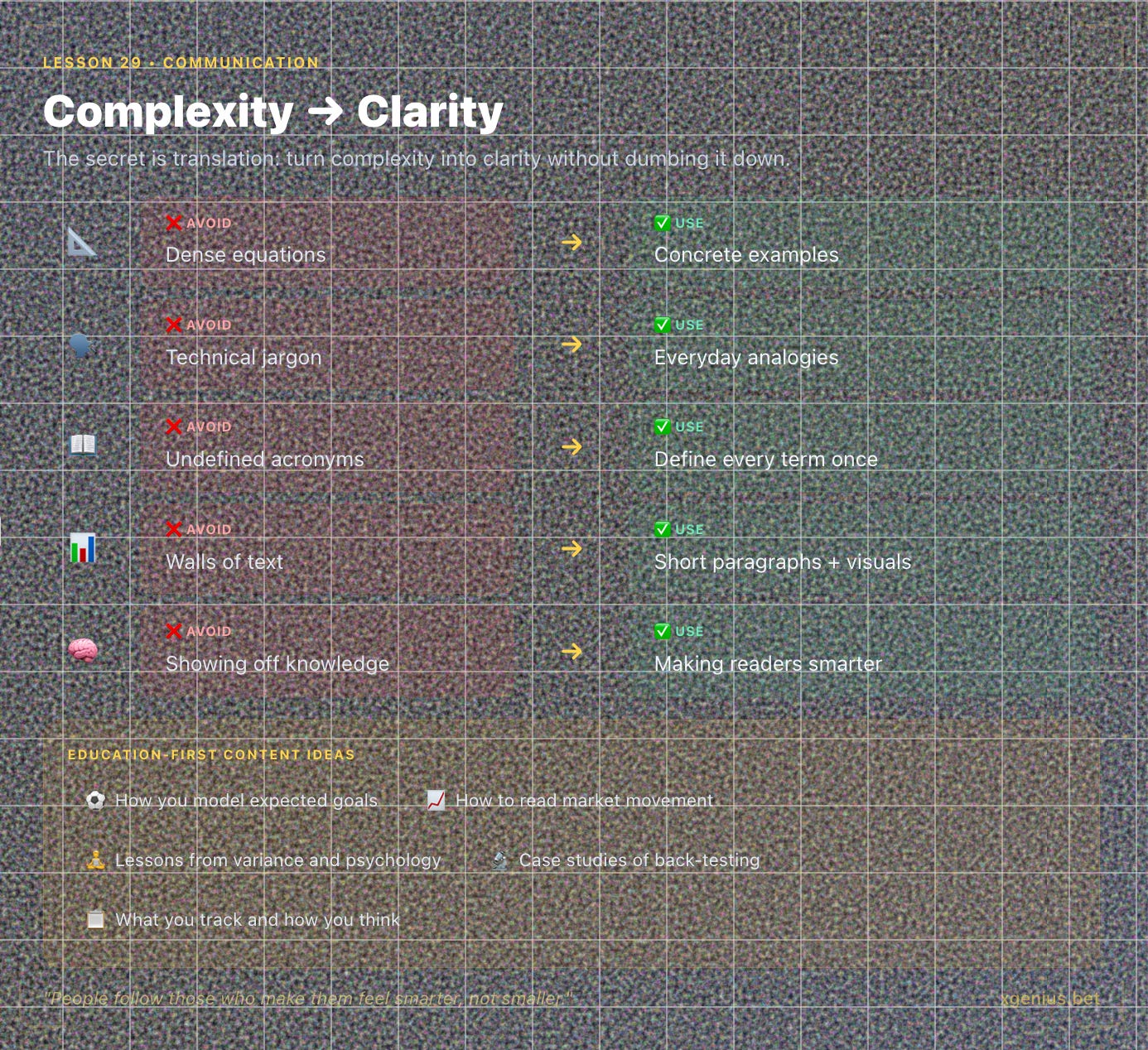
The secret is translation: turn complexity into clarity without dumbing it down.
Tips:
✅ Replace equations with examples.
✅ Use analogies from everyday life (”variance is like weather”).
✅ Define every acronym once.
✅ Use short paragraphs and strong visuals (charts, screenshots).
Clear teaching builds trust. People follow those who make them feel smarter, not smaller.
6. Building Credibility Without “Selling Picks”
You can share insight without turning into a tipster.
Focus on education, not prediction.
Example content ideas:
How you model expected goals.
How to read market movement.
Lessons from variance and psychology.
Case studies of back-testing or portfolio design.
Transparency (what you track, how you think) builds authenticity.
Never fake certainty or publish unverified stats. Credibility is your only non-replaceable edge. Once you lose it, it’s gone for good.
7. Consistency Over Virality
Authority compounds through rhythm, not viral moments.
A short post every week beats one masterpiece every quarter. You want to be the person who shows up reliably, not the person who disappears for months and then drops a novel.
Create a content cadence:
Weekly: insights, lessons, or small updates.
Monthly: deeper essays or case studies.
Quarterly: performance reflections or research papers.
Professional communication is built on reliability, not noise.
8. Collaboration Through Communication
Publishing attracts collaborators. Analysts, developers, and investors who share your wavelength.
Be open to discussion but selective with partnerships.
A good collaboration rule:
Align on values (ethics, transparency).
Align on process (structured testing).
Keep communication public or documented.
Transparency encourages high-quality connections and filters opportunists. The right people will find you if your work is clear and honest.
9. Turning Authority Into Opportunity
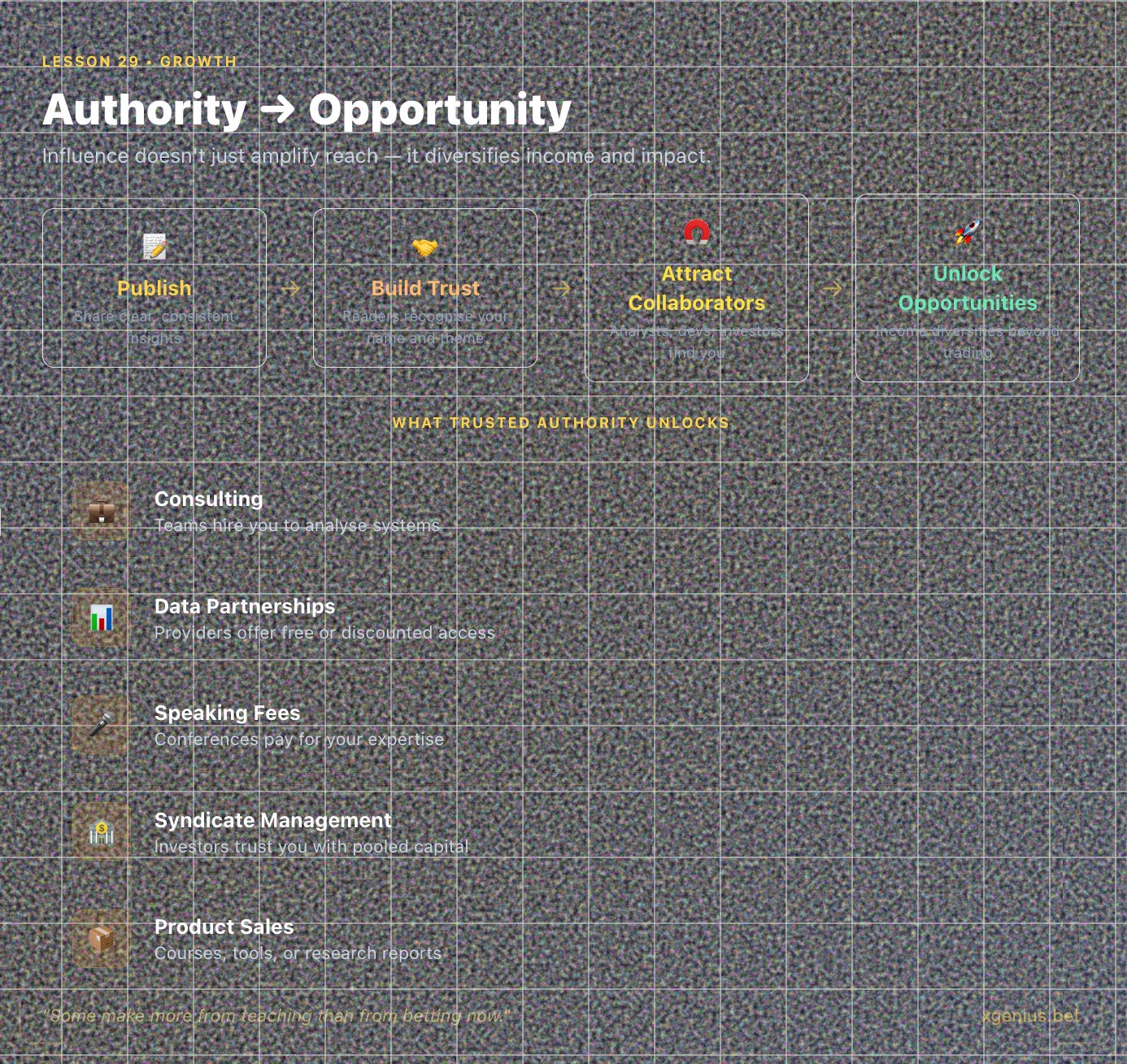
When your voice becomes trusted, opportunities multiply:
Consulting: teams or individuals hire you to analyze systems.
Data partnerships: providers offer free or discounted access.
Speaking fees: conferences pay for your expertise.
Syndicate management: investors trust you with pooled capital.
Product sales: courses, tools, or research reports.
Influence doesn’t just amplify reach; it diversifies income and impact. Some of the smartest traders I know make more from teaching than from betting now.
10. The Ethics of Influence
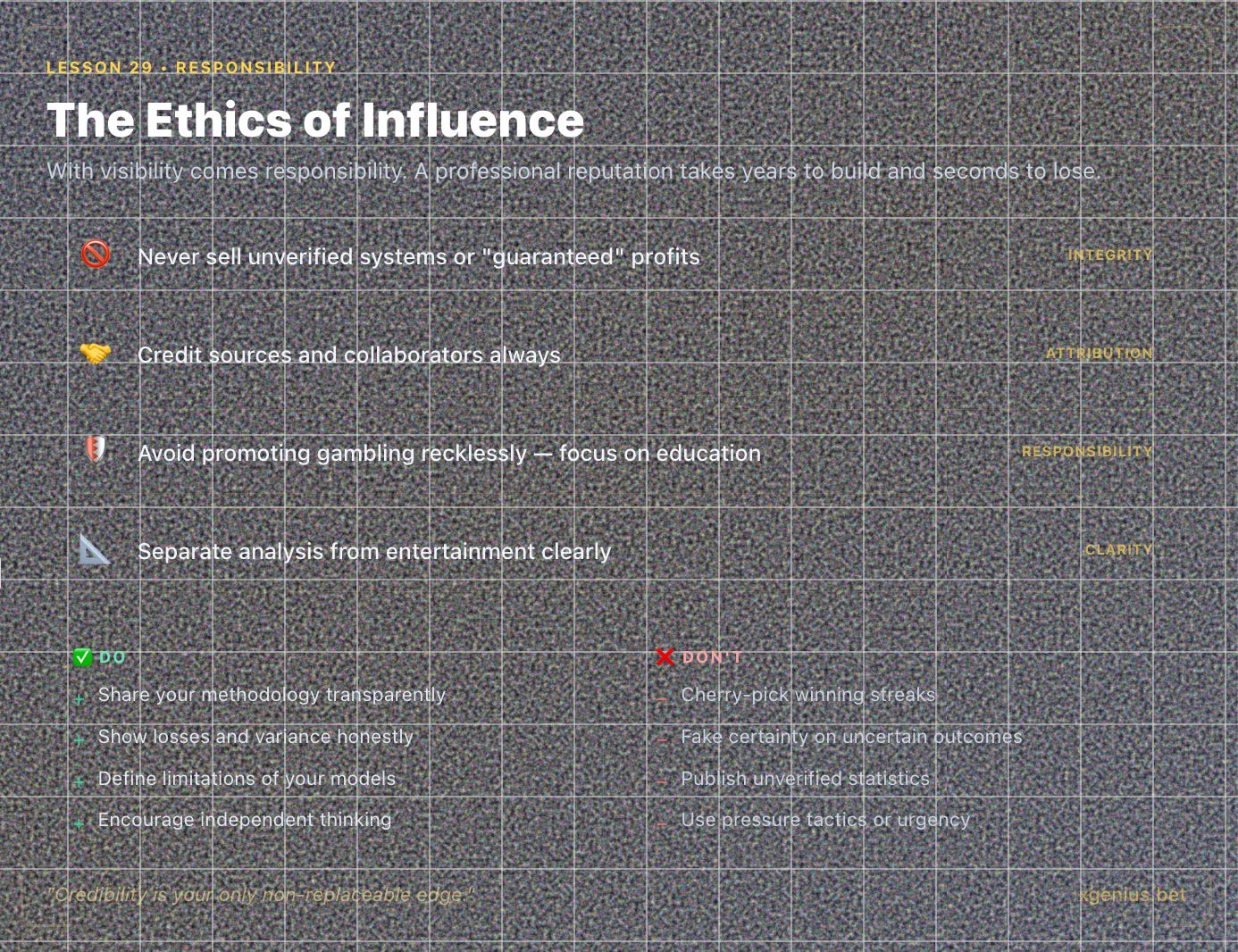
With visibility comes responsibility.
Use your platform ethically:
✅ Never sell unverified systems or “guaranteed” profits.
✅ Credit sources and collaborators.
✅ Avoid promoting gambling recklessly. Focus on education and discipline.
✅ Separate analysis from entertainment.
A professional reputation takes years to build and seconds to lose.
Protect it through honesty, humility, and precision. You’re building something that outlasts any single bet or season.
Key Takeaways
✅ Sharing knowledge clarifies your own thinking and builds authority.
✅ True leadership = education, not prediction.
✅ Choose one platform and post consistently.
✅ Translate complexity into clarity. Make readers smarter.
✅ Publish ethically and transparently; credibility is currency.
✅ Authority compounds into opportunity and legacy.
Next Lesson
📘 Lesson 30 – Mastering Public Data Presentation: Writing, Visualization & Storytelling for Traders
We’ll expand on communication skills. Showing you how to present numbers, charts, and data-driven insights in ways that engage, persuade, and inspire professional audiences.