


Betting Knowledge Series — Lesson 10
Staying Rational Through Wins and Losses: Building Emotional Resilience
Introduction
When most people lose, they feel unlucky.
When they win, they feel brilliant.
Both reactions are emotional traps.
In reality, short-term outcomes in betting are mostly variance, not verdicts.
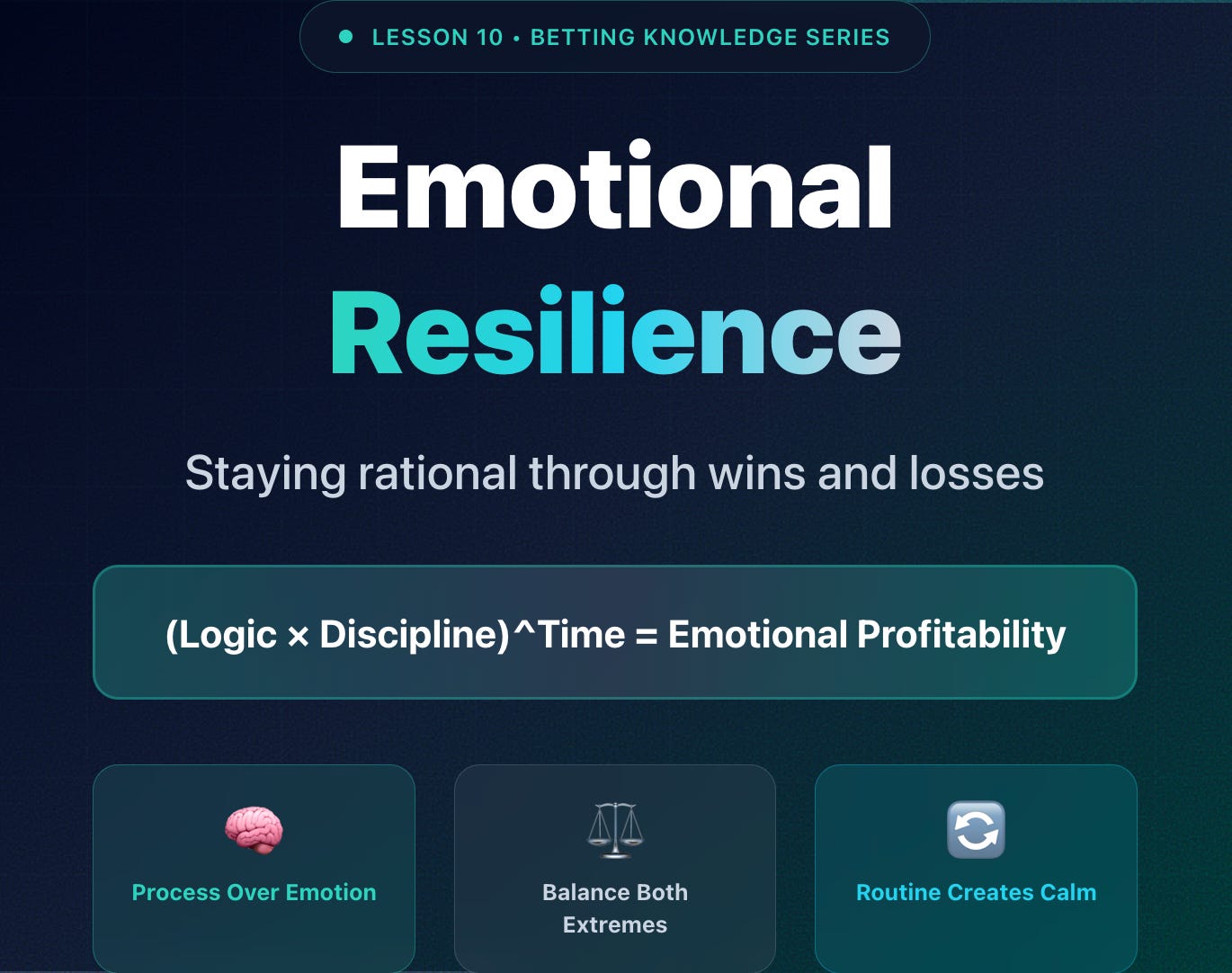
When most people lose, they feel unlucky.
When they win, they feel brilliant.
Both reactions are emotional traps.
In reality, short-term outcomes in betting are mostly variance, not verdicts.
A professional’s advantage comes from controlling reactions, not results.
In this lesson, we’ll explore how to develop emotional resilience so that every win and loss is processed with logic, not impulse.
1. Emotion vs. Process
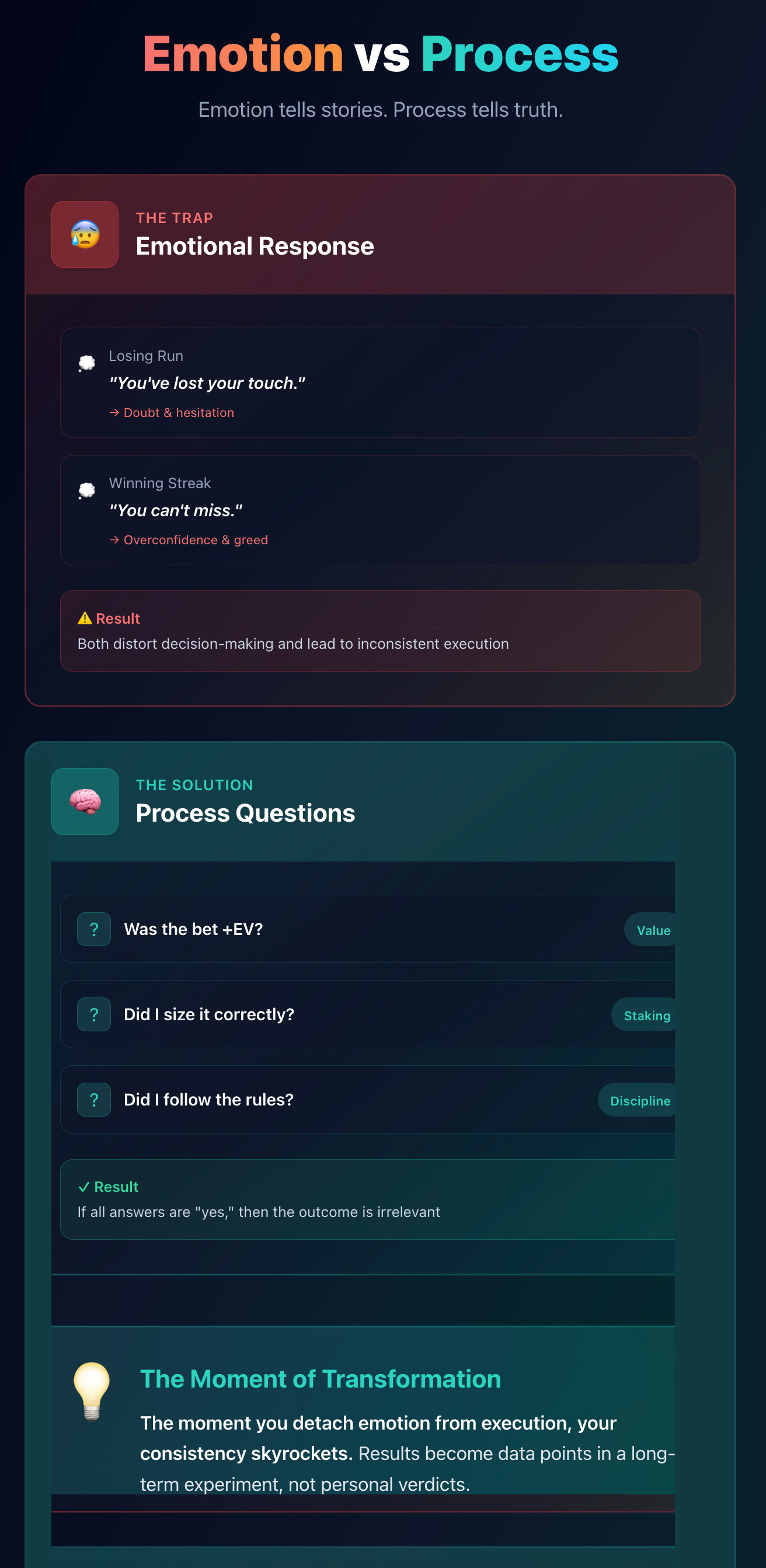
Emotion tells stories. Process tells truth.
When you’re on a losing run, emotion whispers: “You’ve lost your touch.”
When you’re winning: “You can’t miss.”
Both voices distort decision-making.
Process, on the other hand, asks calm questions:
Was the bet +EV?
Did I size it correctly?
Did I follow the rules?
If the answers are “yes,” then the outcome is irrelevant.
The moment you detach emotion from execution, your consistency skyrockets.
2. The Danger of Overconfidence
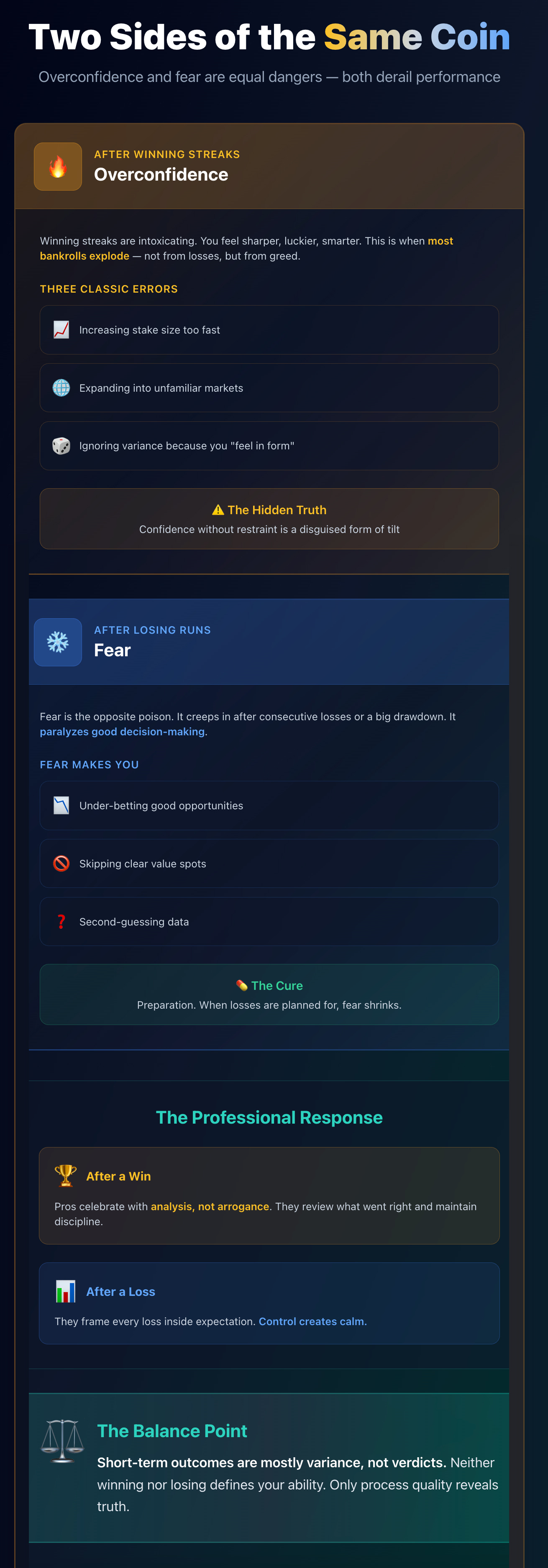
Winning streaks are intoxicating.
You feel sharper, luckier, even smarter.
This is when most bankrolls explode, not from losses, but from greed.
Overconfidence breeds three classic errors:
Increasing stake size too fast.
Expanding into unfamiliar markets.
Ignoring variance because you “feel in form.”
Confidence without restraint is a disguised form of tilt.
The pros celebrate a win with analysis, not arrogance.
3. The Fear of Losing
Fear is the opposite poison.
It makes you under-bet, skip value spots, and second-guess data.
Fear creeps in after consecutive losses or a big drawdown.
The cure? Preparation.
When you already know your statistical losing streak tolerance (Lesson 5), you frame every loss inside expectation.
Fear shrinks when losses are planned for. Control creates calm.
4. Tilt and Emotional Hijacking
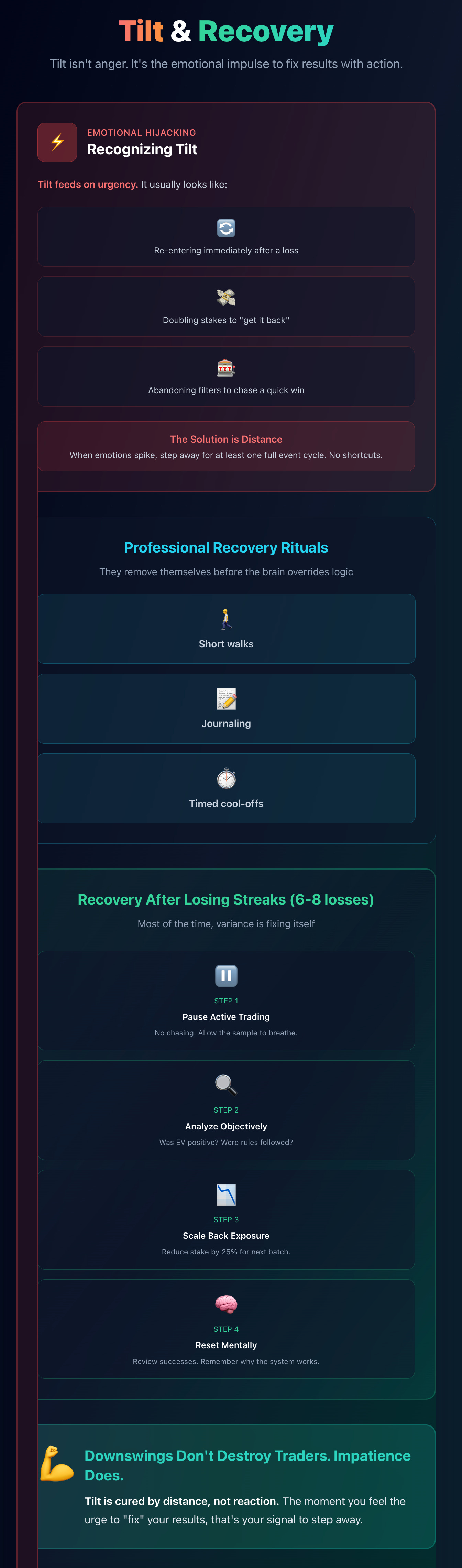
Tilt isn’t anger. It’s the emotional impulse to fix results with action.
It usually looks like:
Re-entering immediately after a loss.
Doubling stakes to “get it back.”
Abandoning filters to chase a quick win.
Tilt feeds on urgency.
The solution is distance.
When emotions spike, step away for at least one full event cycle. No shortcuts here.
Professional traders have recovery rituals: short walks, journaling, or timed cool-offs.
They remove themselves before the brain overrides logic.
5. The Professional Detachment Mindset
To build detachment, you must think in samples, not singles.
Every bet is one of hundreds in a long-term experiment. Once it’s placed, its outcome doesn’t define you.
Start treating each trade like a coin toss in a scientific test.
You record, review, and move on.
When you truly adopt that perspective, variance loses its emotional grip. Perhaps that’s the hardest shift to make, but it’s worth it.
6. Creating a Neutral Routine
Structure protects you from emotional swings.
Design your day so decision-making happens automatically, not reactively.
Example routine:
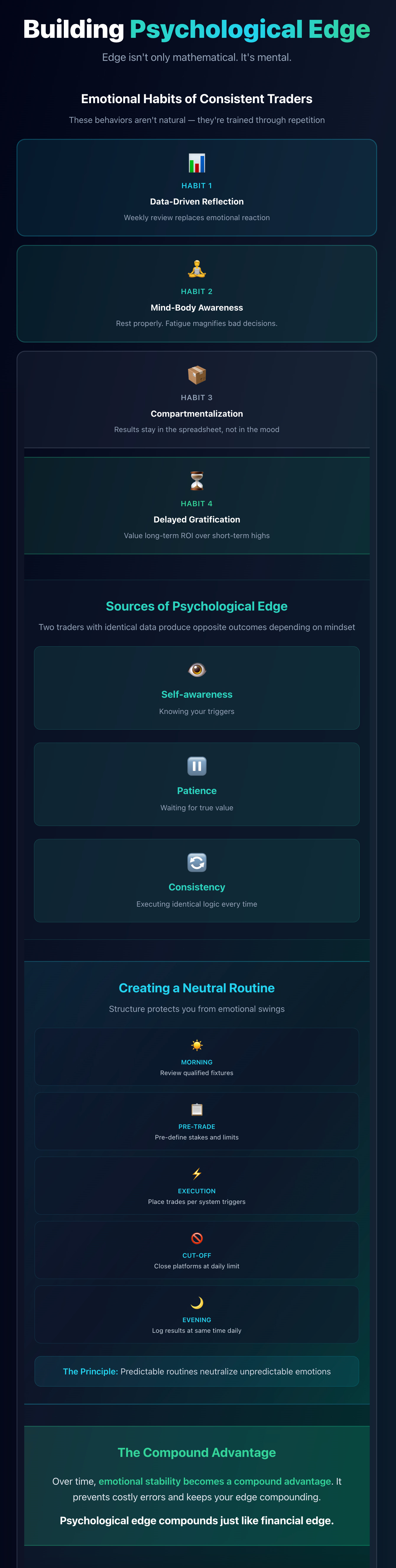
Review qualified fixtures each morning.
Pre-define stakes and limits.
Place trades according to system triggers.
Close all platforms after daily limit reached.
Log results at the same time each evening.
Predictable routines neutralize unpredictable emotions.
7. Recovery After Losing Streaks
After 6–8 losses in a row, the instinct is to fix something.
Most of the time, variance is fixing itself.
Here’s the recovery framework professionals use:
Pause Active Trading. No chasing. Allow the sample to breathe.
Analyze Objectively. Was the EV positive? Were rules followed?
Scale Back Exposure. Reduce stake by 25% for the next batch of trades.
Reset Mentally. Review successes. Remind yourself why the system works.
Downswings don’t destroy traders. Impatience does.
8. Emotional Habits of Consistent Traders
Common habits among resilient professionals:
Data-Driven Reflection: Weekly review replaces emotional reaction.
Mind-Body Awareness: They rest properly. Fatigue magnifies bad decisions.
Compartmentalization: Results stay in the spreadsheet, not in the mood.
Delayed Gratification: They value long-term ROI over short-term highs.
These behaviors aren’t natural. They’re trained through repetition.
9. Building Psychological Edge
Edge isn’t only mathematical. It’s mental.
Two traders with identical data produce opposite outcomes depending on mindset.
Psychological edge comes from:
Self-awareness (knowing triggers).
Patience (waiting for true value).
Consistency (executing identical logic every time).
Over time, emotional stability becomes a compound advantage.
It prevents costly errors and keeps your edge compounding.
10. The Resilience Formula
Emotional Profitability = (Logic × Discipline)^Time
Logic keeps decisions rational.
Discipline ensures consistency.
Time allows compounding.
Master these three, and no streak (good or bad) can derail you.
Key Takeaways
✅ Results don’t define performance. Process does.
✅ Overconfidence and fear are two sides of the same coin.
✅ Tilt is cured by distance, not reaction.
✅ Routines create neutrality.
✅ Recovery = pause, analyze, adjust, reset.
✅ Psychological edge compounds just like financial edge.
Next Lesson
📘 Lesson 11: Understanding Market Efficiency — Where Edges Hide and Disappear
We’ll break down how betting markets price information, why true inefficiencies are rare, and how sharp bettors exploit (then exit) opportunities before they vanish.
Anybody else joined the paying Xgenius Platinum but not received any emails or tips?