


The 48-team World Cup explained
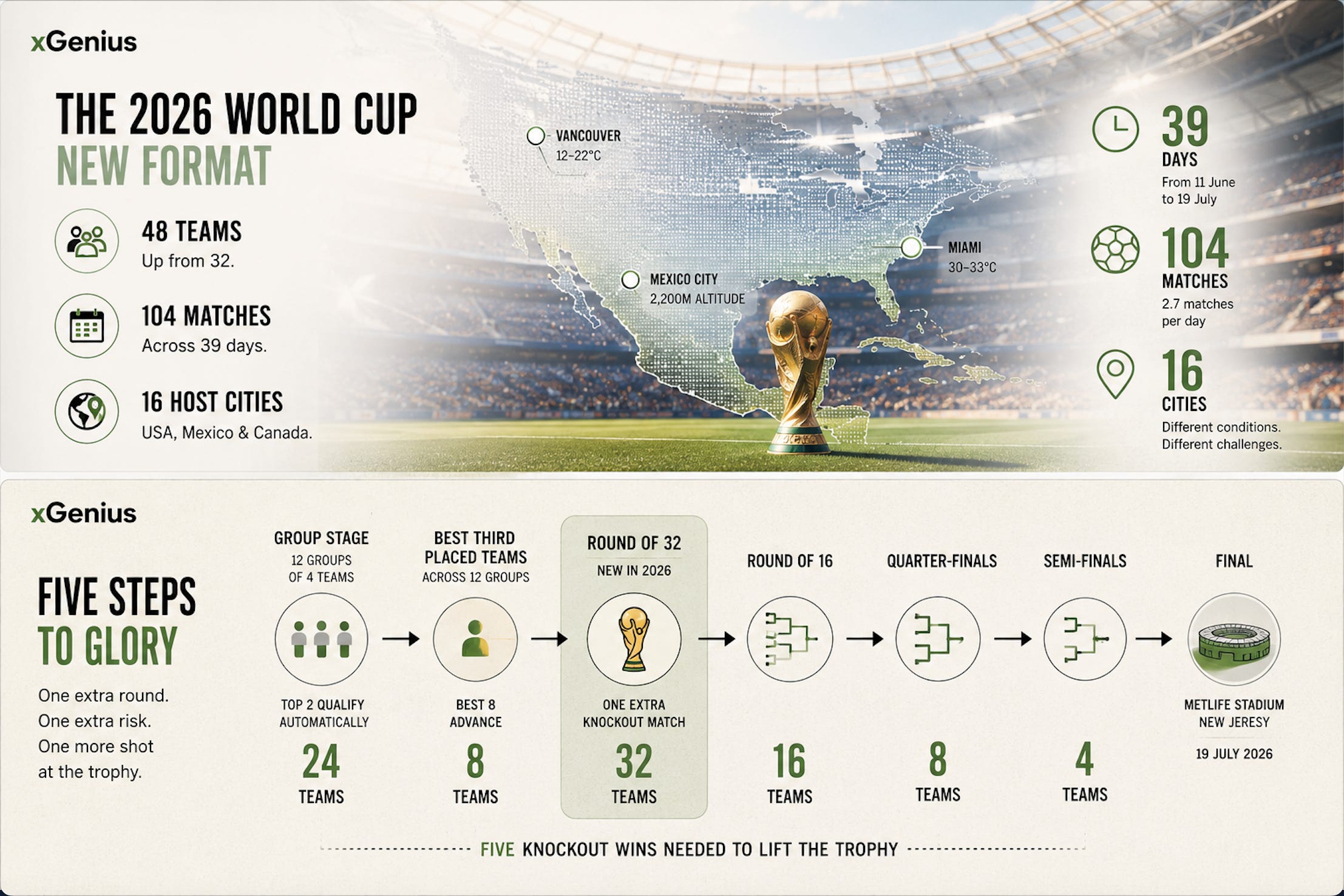
The 2026 World Cup kicks off on 11 June at the Estadio Azteca.
48 nations.
12 groups of four.
104 matches.
39 days.
16 host cities across the United States, Mexico and Canada.
It’s the biggest World Cup ever staged.
It’s also the first World Cup since 1998 with a new structural shape. Seven tournaments since France 98 have all run on the same 32-team, 64-match template. The 2026 tournament breaks the rails.
For the bettor, that matters more than the headlines suggest.
The Round of 32 changes everything
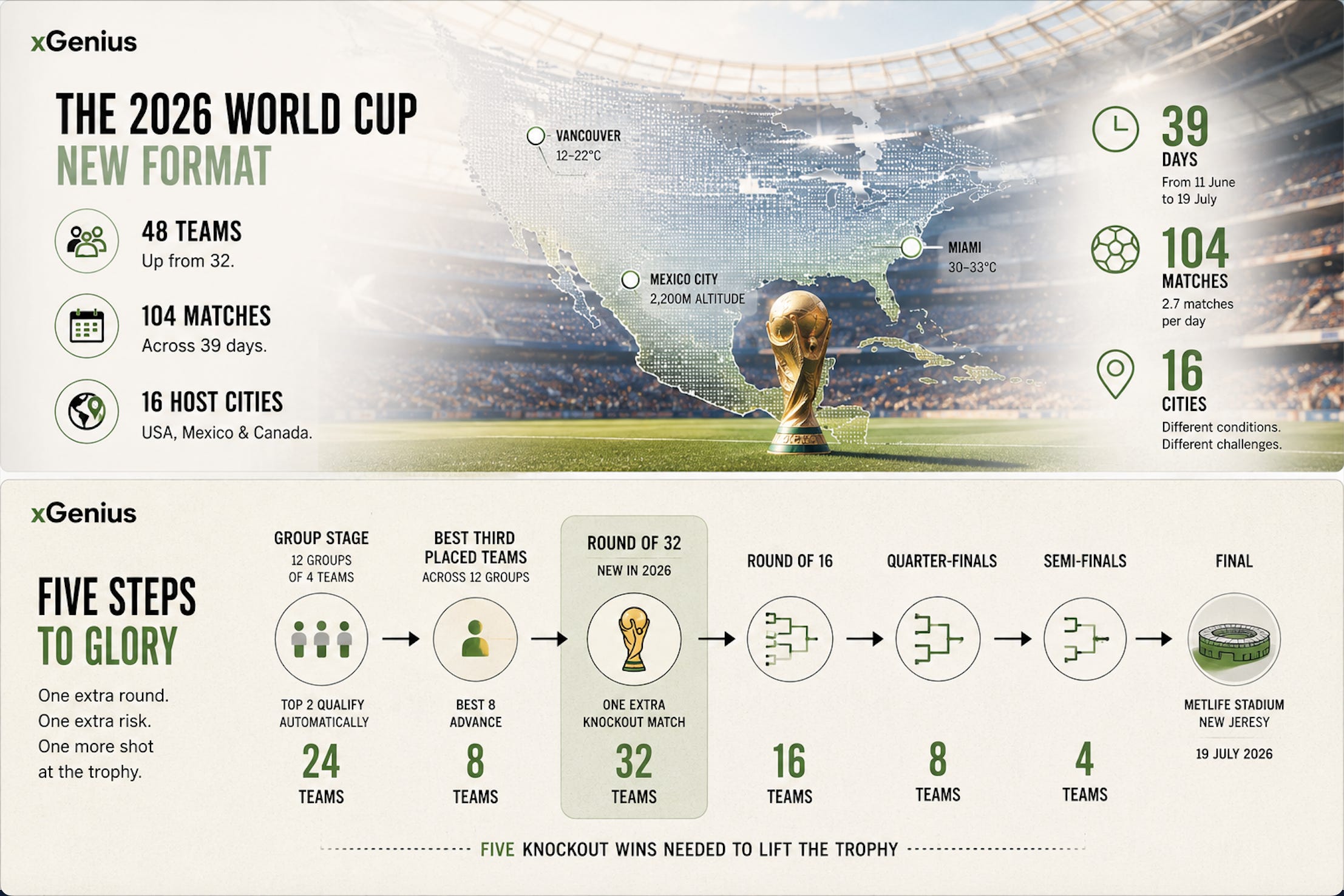
In 2022, four knockout matches stood between the group stage and the trophy. In 2026 there are five.
A new Round of 32 sits at the front of the bracket. One extra knockout match. One extra opportunity for any side to have an off day and head home early.
The bookmakers have priced the outright market on the old four-knockout structure. The fifth game has been largely ignored.
When you run the probabilities, the impact on the favourites is significant.
Top two from each of the 12 groups qualify automatically - that’s 24 teams. The remaining eight slots go to the best eight third-placed teams across the 12 groups.
The third-place safety net rewards the heavily-favoured nations who can afford to lose an opener. It also reshapes how the early group fixtures get played.
The group betting markets need reading through this lens. We’ve named the three most miss-priced groups in Chapter 5 of the World Cup Briefing.
A 39-day endurance test
Tournament football is not Premier League football for the bettor.
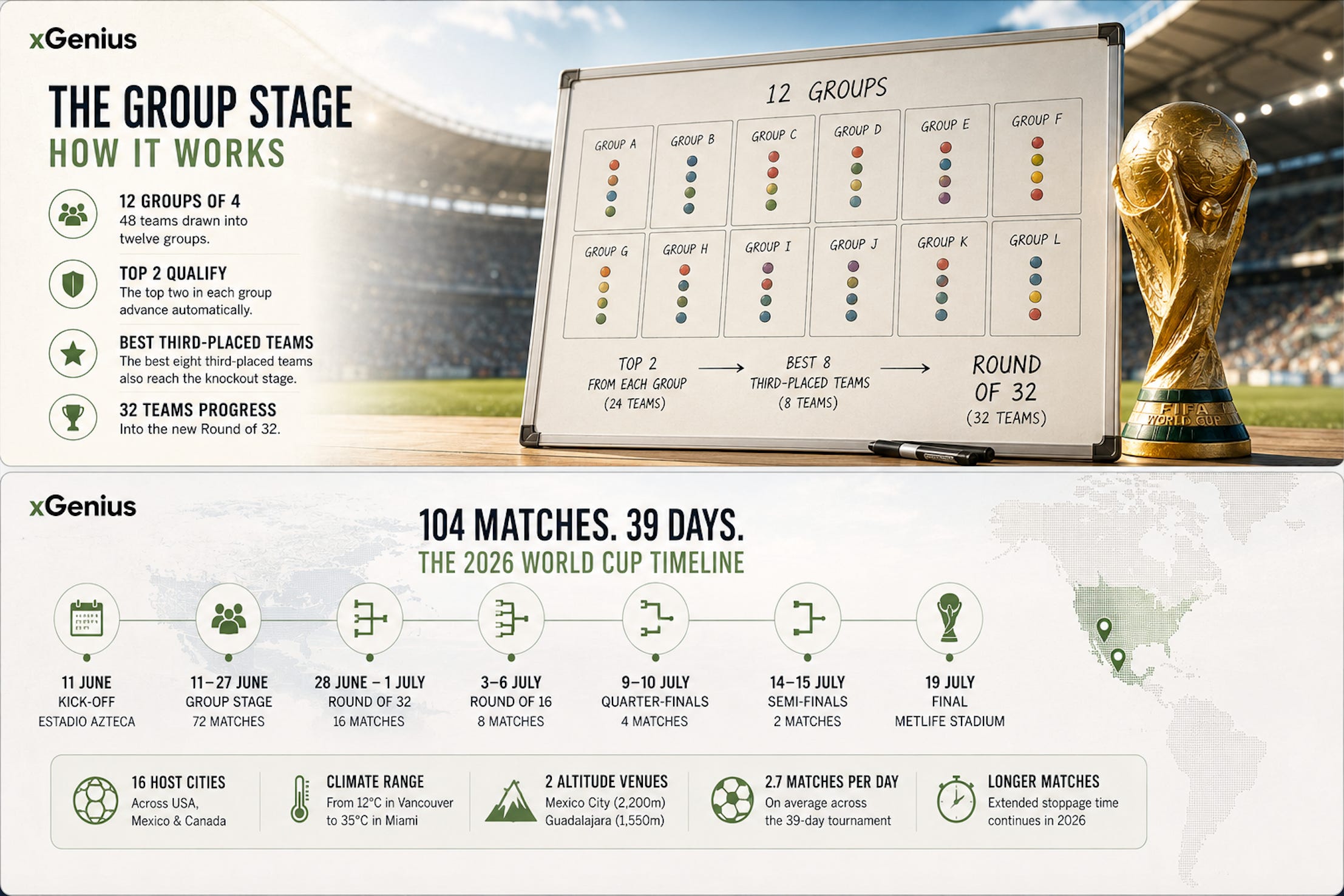
The Premier League delivers 10 matches across a typical Saturday-Sunday game week. The 2026 World Cup compresses 104 fixtures into 39 days.
2.7 matches per day. Up to six in a single 24-hour window on the densest dates.
More matches means more potential market miss-pricings to find.
It also means more fatigue, more temptation to over-trade, and a harder discipline test than any league season.
A bankroll plan you don’t have will be tested. A bankroll plan you do have will earn its keep.
27% of all goals come in the closing 15 minutes
Across the last five World Cups, 27% of all goals have been scored in the final 15 minutes of matches.
The closing window carries more goals than any other 15-minute interval by some margin.
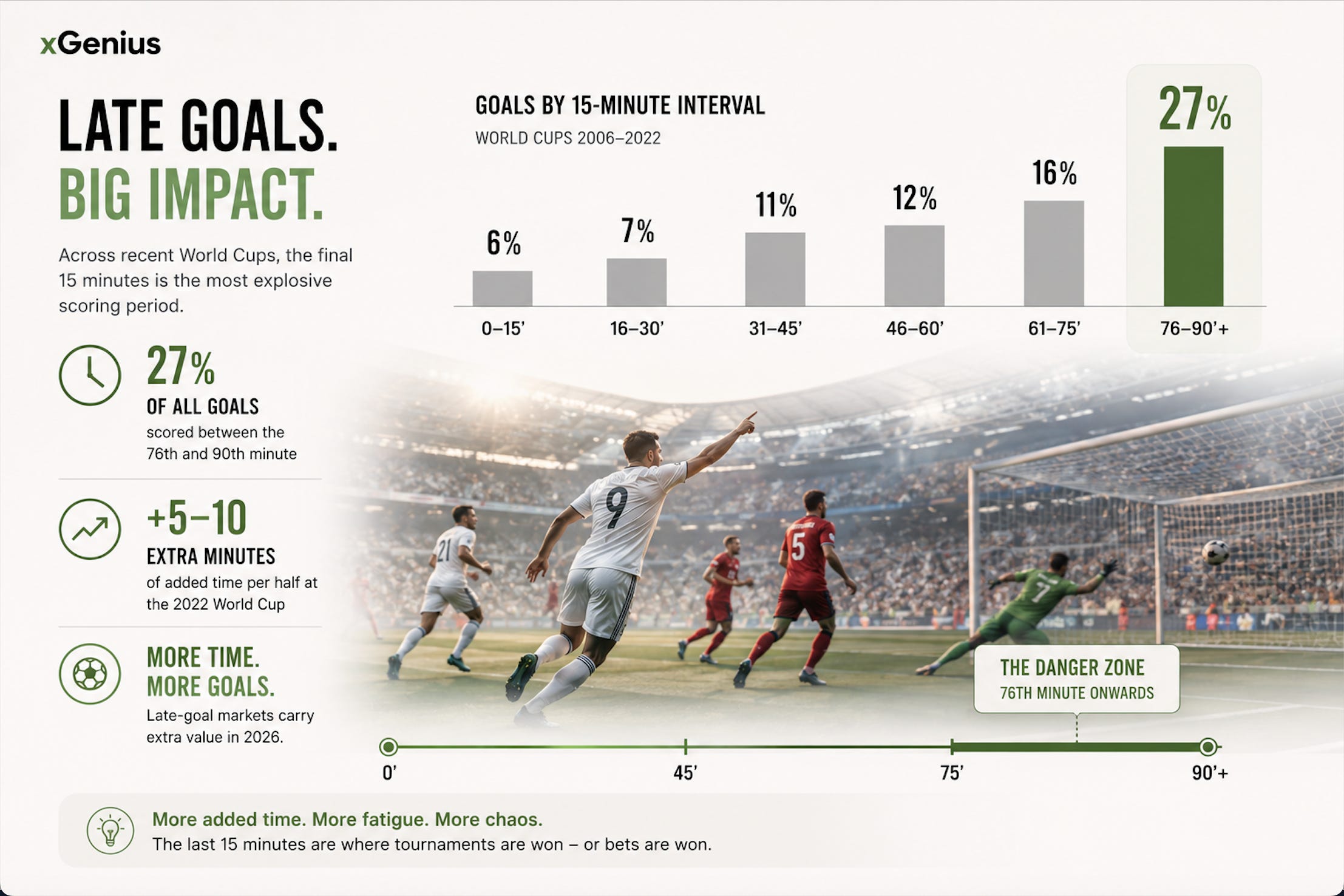
The 2022 tournament introduced something else - extended stoppage time, averaging an extra 5-10 minutes per half. That continues in 2026.
More added time. More fatigue. More goals.
The bookmakers’ total goals lines, second-half over lines and in-play late-goal markets have not fully adjusted. Late-goal markets carry extra value at the 2026 tournament.
Repeating the 2022 playbook will leave money on the table
Seven World Cups since 1998 on the same 32-team rails. 2026 breaks them.
A new bracket length.
A new third-place safety net.
A new 39-day calendar.
A new set of markets the bookmakers are still adjusting to.
The xGenius World Cup Briefing is built specifically for the 2026 tournament.
Inside:
· The real Group of Death (it might surprise you)
· Three ways to profit on the winner market without backing Spain
· The 15-Minute Profit Window
· The hidden accumulator strategy that could prove a gold mine
· How to survive 39 days of betting - the World Cup bankroll plan
